

(And Why We Decided to Add the Enneagram to our work with Leaders and Teams)
Most effective leaders reach a point where effort alone stops being enough. A reaction surprises you, a relationship stays stuck, a pattern you've noticed but haven't been able to shift.
The truth is that most leaders aren’t limited by lack of effort or ability — it’s something they can’t see that affects behavior and makes it hard to change.
MOTIVATION is like a keystone — everything else depends on it. It accounts for what you are driven to do well - your strengths. But it also drives unconscious beliefs and self-talk that can keep you stuck in habitual patterns. It doesn't show up on a résumé or in a 360 review. And the patterns it creates in behavior happen long before someone steps into a leadership role. In a team, it shows up quietly too — in how trust gets built, how pressure gets absorbed, whether conflict sharpens the group or stalls it. Most leadership tools don't go there. The Enneagram does.
The Why Beneath the What - A Different Kind of Self-Knowledge
Most leadership assessments describe behavior. They tell you what you do — how you communicate, how you prefer to work, how you tend to process conflict.
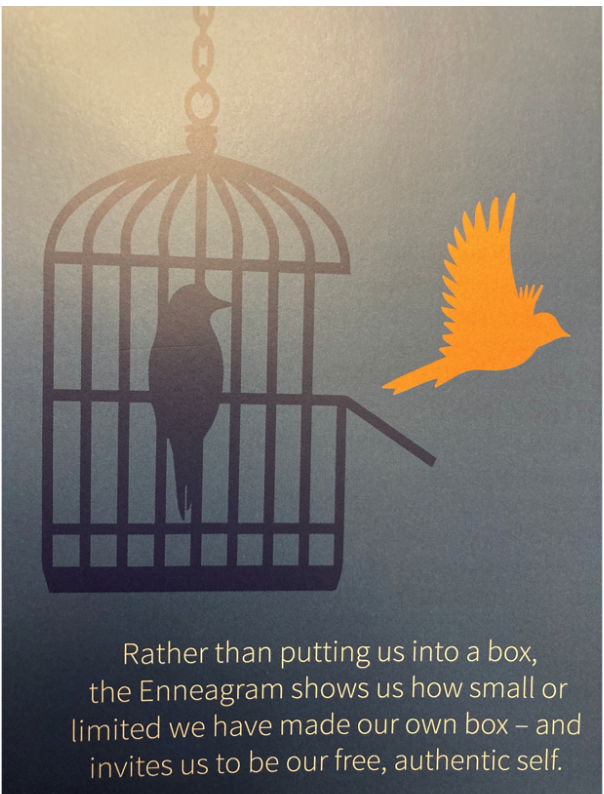
The Enneagram looks underneath behavior to discover the patterns in why you do them. It maps the motivational patterns, core assumptions, and habitual responses that sit beneath behavior — the internal logic that shapes how a leader thinks, relates, and responds especially when things get hard. It gets at the WHY beneath the WHAT.
Each of us is motivated, at our core, by something different. Some are driven to do what's right; others to help, to understand, to be the best, to belong. Knowing that about yourself — and about the people around you — is not a small thing.
For the leaders and teams we work with, this creates something rare: a moment of genuine recognition - and leverage to shift if you choose. Not "here's a profile that describes you," but "here's what drives you to do what you do — and here's what becomes possible when you understand that and act from the freedom it gives you to access different styles."
That kind of self-awareness doesn't just help individual leaders grow. It can change how you lead and how your teams work together.
What We've Seen in Practice
We've used the Enneagram across a range of organizations — a CPA firm, a management consultancy, a policy research institute, a university department head, a public health agency, a municipal court, and a city finance department. Different sectors, different sizes, different challenges.
A consistent theme emerges: when leaders understand the motivational logic beneath each other's behaviors, trust deepens and collaboration improves. The friction that once felt personal starts to look like a fascinating puzzle. And once you can see a pattern, you have the power to change it. The Enneagram will help you and your team identify those developmental pathways.
One leadership team put it this way:
"The Leadership Team found the sessions extremely valuable. We came away with a much deeper understanding of each other, and how our motivations influence our behaviors and team dynamics. Over the next six months, we will check in regularly as we work on the specific commitments we each made toward Enneagram-based development of ourselves and our team effectiveness."
That's the kind of outcome we're after. Not a one-time insight — but a shift that keeps paying forward.
Rigorous Tools, Skilled Application
As with any instrument, the value of the Enneagram depends on how it is used. It’s not a quick fix or a way to label people; it’s a whole developmental support system for individuals and teams. And partnering with a skilled practitioner helps you get the most out of the tool.
For our clients, this work is led by Gurudev Khalsa, Principal Consultant at Trebuchet Group. Gurudev is a long-time Enneagram user and an accredited iEQ9 Integrative Enneagram Practitioner. This certification involved intensive training on its application in coaching individuals and advanced training for applying it to team dynamics and development. The iEQ9 is one of the most robust Enneagram assessments available — precise, nuanced, and built for developmental work, not pop psychology or static typing.
Gurudev brings both the depth of knowledge and the relational skill to make this more than just another assessment. He makes it useful. And supports you in experimenting with the gifts of other styles when that’s what a situation calls for.
If you're the kind of person who has invested in your own development, who takes feedback seriously, who genuinely wants to understand why the same patterns keep showing up — the Enneagram tends to land differently than other tools. It doesn't just confirm what you already know about yourself. It often points to something you've felt but maybe haven't been able to name or change, and empowers you to do so.
An Invitation
If you're curious whether this work might be right for you and/or your leadership team, we'd welcome a conversation. Reach out to Gurudev directly — and tell him what's prompting the question. That's usually the best place to start.
The leaders we work with are already capable and committed. This work helps them lead with even greater clarity, presence, and impact — and build teams that do the same.